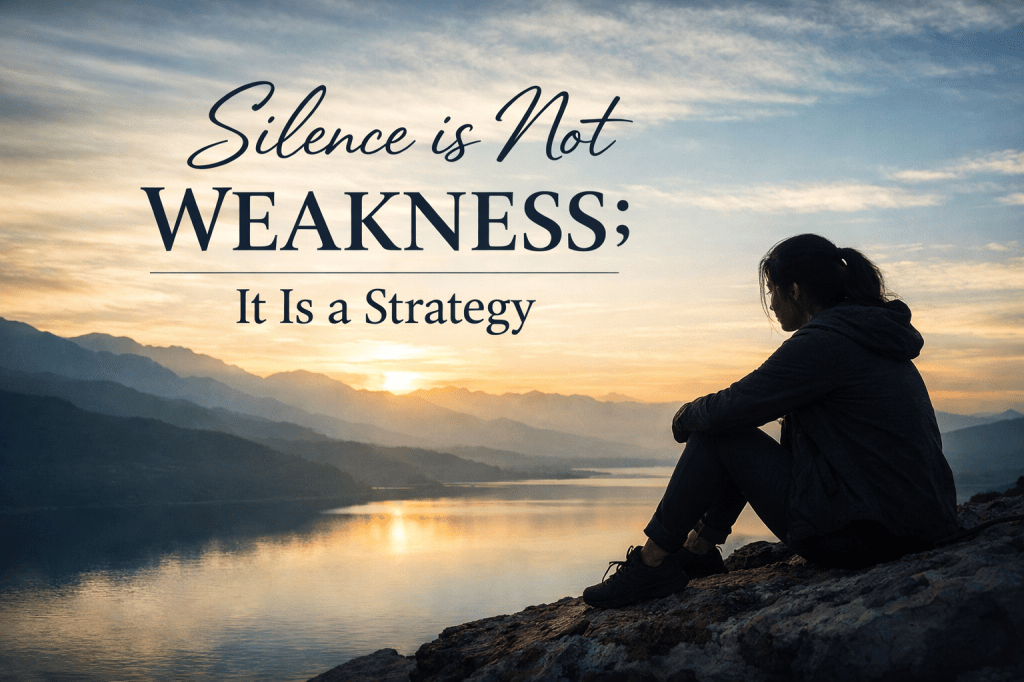
In a world that rewards noise, instant replies, and public defence, silence is often misunderstood. We are conditioned to believe that strength must be loud, that clarity requires constant explanation, and that every accusation demands a response. Yet Scripture teaches us something different. Silence, when chosen deliberately, is not weakness. It is a strategy.
“Whoever restrains his words has knowledge, and he who has a cool spirit is a man of understanding.”
Proverbs 17:27
Silence is the discipline of restraint. It is the ability to pause, discern, and refuse to be drawn into battles that drain purpose rather than advance it.
Not Every Situation Deserves Your Voice
One of the greatest mistakes we make is assuming that every misunderstanding requires correction and every misinterpretation needs clarification. This mindset places your peace at the mercy of other people’s opinions.
Jesus Himself demonstrated strategic silence. When falsely accused and questioned, He did not rush to defend His reputation.
“But Jesus remained silent and made no answer.”
Mark 14:61
He knew who He was. He trusted that truth did not need constant validation.
Silence says, “I am secure enough not to argue with noise.”
Silence Protects Your Energy and Focus
Every response costs energy. Every explanation consumes emotional bandwidth. When you respond to everything, you leave little capacity for what truly matters.
Strategic silence is a form of stewardship. It preserves strength for assignments that align with your calling.
“The prudent see danger and take refuge, but the simple keep going and pay the penalty.”
Proverbs 22:3
Some doors close not because you failed to speak, but because you wisely chose not to.
Silence Reveals Character, Yours and Theirs
When you remain silent, you create space. In that space, motives are exposed, intentions surface, and truth often reveals itself without your intervention.
“Even a fool who keeps silent is considered wise; when he closes his lips, he is deemed intelligent.”
Proverbs 17:28
Silence filters relationships and clarifies seasons. It reveals emotional maturity, which is not measured by how loudly you respond, but by how well you remain composed under pressure.
Silence Is an Act of Trust
Choosing silence often feels risky. It requires faith. Faith that God is your defender. Faith that truth will stand without your constant effort.
“The Lord will fight for you; you need only to be still.”
Exodus 14:14
Silence says, “I trust God to handle what I cannot control.”
When Silence Becomes Strength
Silence becomes powerful when it is intentional, not passive. This is not about avoidance or fear. It is about discernment.
“There is a time to be silent and a time to speak.”
Ecclesiastes 3:7
Strength is knowing when to speak and when to step back. Strength is choosing peace over pride. Strength is understanding that not every table deserves your presence, and not every conversation deserves your voice.
Final Reflection
Silence is not surrender.
It is not weakness.
It is not defeat.
It is strategy.
It is wisdom.
It is confidence rooted in identity.
Sometimes the boldest move you can make is to say nothing at all.
From Bound to Bold
Reflection Questions
In what situations do I feel pressured to explain or defend myself, even when peace would be better protected by silence? Is my urge to respond driven by wisdom, or by emotion, pride, or fear of being misunderstood? What would it look like to trust God as my defender in this season? Are there conversations, platforms, or relationships where silence may be the more strategic response? How can I practice intentional silence without withdrawing from truth or love?
 Breaking Barriers - From Bound to Bold
Leave a comment