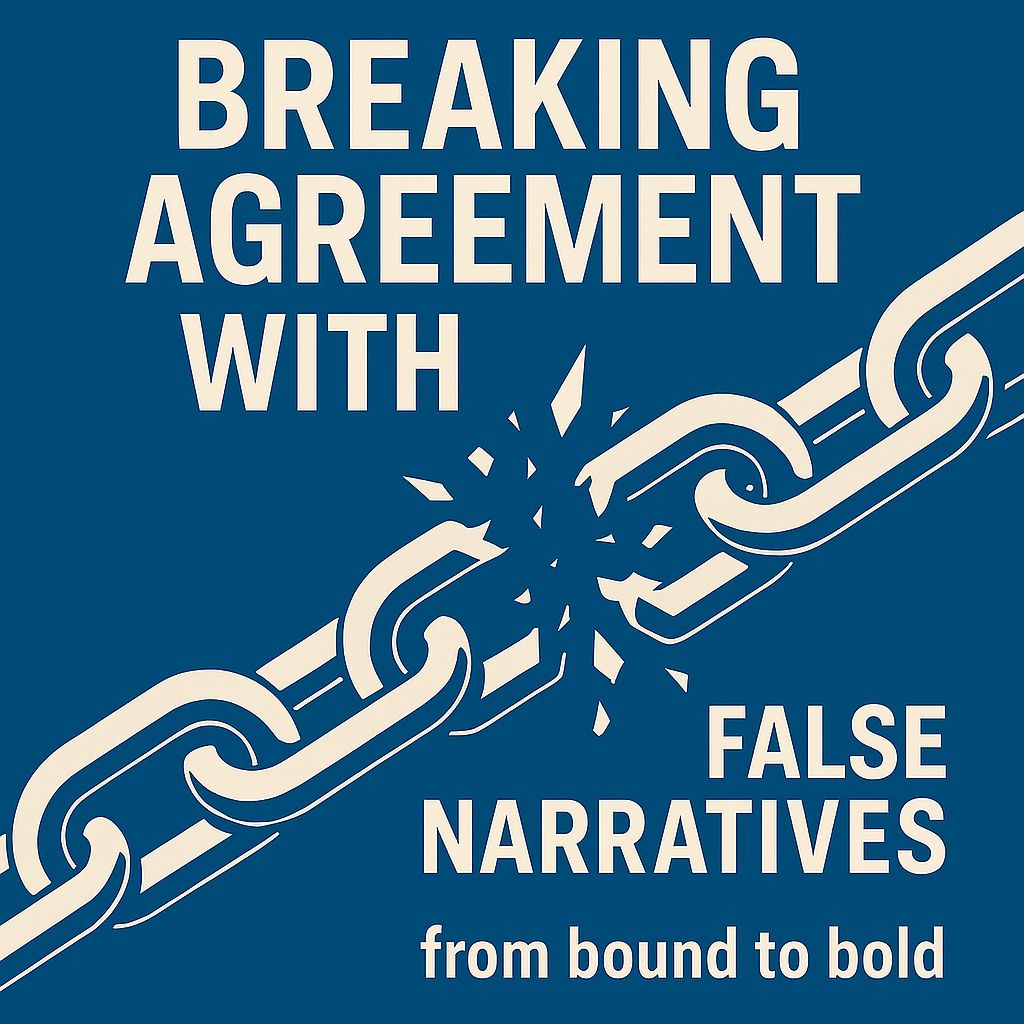
In every generation, people wrestle with stories that attempt to define them. Some of these stories are empowering and truthful. Others are subtle distortions that quietly shape identity, expectation, and behaviour. False narratives often begin as whispers. They may come from past experiences, cultural pressures, or internal doubts. Over time, they can become so familiar that they appear to be facts rather than assumptions.
Breaking agreement with these narratives is not a moment of rebellion. It is an act of restoration. It is the deliberate choice to reclaim authorship of one’s life and to align with truth rather than fear, limitation, or inherited misunderstanding.
Recognising the Power of Narrative
Human beings interpret life through stories. We use them to make sense of events, relationships, and our place in the world. When a narrative is healthy, it provides grounding and clarity. When it is false, it restricts growth and distorts perception.
False narratives often take the form of internal statements such as:
- “I am not capable.”
- “People like me do not succeed.”
- “My past determines my future.”
- “I must shrink myself to be accepted.”
These statements are rarely questioned because they feel familiar. Yet familiarity is not the same as truth.
How False Narratives Take Root
False narratives usually form in moments of vulnerability. A single comment from a teacher, a difficult childhood experience, or a season of disappointment can plant a seed. Over time, repetition strengthens the belief until it becomes a quiet background script.
They also thrive in environments where comparison is normal. Social media, cultural expectations, and performance-driven spaces can reinforce the idea that one must meet a particular standard to be worthy.
The Cost of Agreement
Agreeing with a false narrative has consequences. It shapes decisions, relationships, and opportunities. It influences how one interprets challenges and how one responds to success. Most importantly, it limits the imagination. When a person believes a false story about themselves, they stop exploring what is possible.
Agreement is powerful. It gives permission. When we agree with a lie, we give it authority. When we withdraw agreement, we remove its influence.
Breaking Agreement with False Narratives
Breaking agreement begins with awareness. It requires the courage to examine long-held assumptions and to ask whether they are rooted in truth or fear.
The process involves several key steps:
- Identify the Narrative
Name the belief that has shaped your thinking. Clarity is the first step towards freedom. A narrative loses power when it is brought into the light.
- Challenge Its Validity
Ask whether the narrative is supported by evidence. Often, false narratives crumble under scrutiny. They rely on emotion rather than fact.
- Replace It with Truth
A void must be filled. Replace the false narrative with a statement that reflects reality, dignity, and possibility. This is not empty optimism. It is the intentional choice to align with truth.
- Practise the New Narrative
Transformation requires repetition. Speak the new narrative consistently. Allow it to shape your decisions and actions. Over time, it becomes the dominant story.
- Surround Yourself with Affirming Voices
Community plays a vital role in reinforcing truth. Seek relationships that encourage growth and challenge limiting beliefs.
The Freedom of a New Story
Breaking agreement with false narratives is not a denial of past experiences. It is the recognition that the past does not have the right to dictate the future. It is the decision to live from a place of truth, strength, and clarity.
When a person embraces a new narrative, they step into a wider world. Possibilities expand. Confidence grows. Purpose becomes clearer. Most importantly, they begin to live as the fullest version of themselves.
The stories we agree with shape the lives we build. Choosing truth is an act of courage. It is also an act of liberation.
 Breaking Barriers - From Bound to Bold
Leave a comment