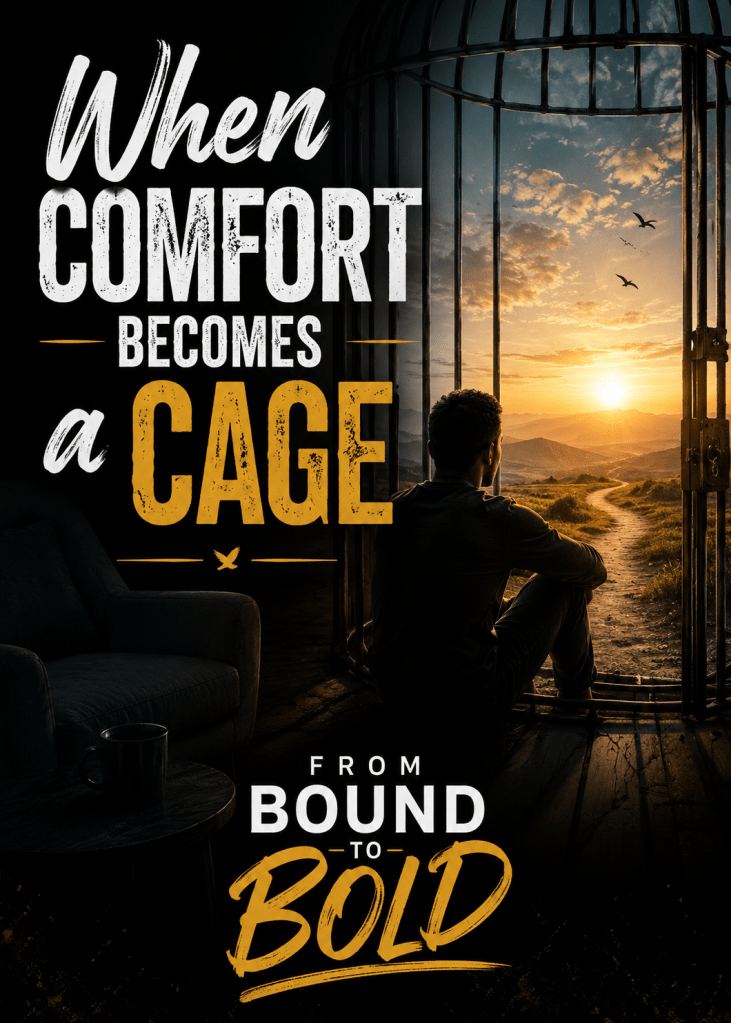
There is a particular kind of stillness that feels like safety but is, in truth, a slow surrender. It does not announce itself with alarm bells. It arrives quietly, dressed as routine, as familiarity, as the comfortable weight of what we already know. We settle into it the way one settles into an old armchair, and before long, we forget that we were ever meant to stand.
Comfort, in itself, is not the enemy. God never asked us to live in constant turmoil, and rest is a gift, not a failure. But there is a difference between rest that restores and comfort that restrains. One prepares you for the next step. The other convinces you there is no next step to take.
The Illusion of Safety
We often mistake the absence of risk for the presence of peace. They are not the same thing. A caged bird is safe from predators, safe from storms, safe from the uncertainty of open sky, but it was never made for a cage. Its wings were fashioned for altitude, not for pacing back and forth along a perch.
So it is with us. We stay in the job that no longer stretches us. We remain in relationships that no longer sharpen us. We keep quiet the dream that once burned bright, telling ourselves it is wisdom, when in truth it is fear wearing wisdom’s coat. Comfort has a way of convincing us that stillness is the same as contentment. It rarely is.
What Comfort Costs You
Nobody warns you that comfort has a price. It does not ask for payment upfront. Instead, it collects slowly, in missed opportunities, in unspoken words, in the quiet erosion of courage that happens when you stop practising it. Every day you choose the familiar over the faithful, the bars of that cage grow a little thicker, though you may not notice, because comfort is patient. It knows it does not need to hurry.
Consider the man who buried his one talent rather than risk it (Matthew 25:24 to 25, NIV). He was not lazy in the way we typically think of laziness. He was cautious. He was safe. And Scripture is clear that his safety was not commended. What was asked of him was not perfection, but courage enough to step out.
The God Who Calls Us Forward
Throughout Scripture, God rarely calls His people to comfort. He calls Abram out of his country and his father’s household into a land he had never seen (Genesis 12:1, NIV). He calls Moses away from the quiet life of shepherding back into a nation that once wanted him dead. He calls Peter out of the boat, onto water that could not naturally hold his weight (Matthew 14:29, NIV). In every case, the call led not to comfort, but to capacity. Growth does not happen within the boundaries of what is easy. It happens at the edge of what is uncertain, where faith becomes necessary rather than optional.
If you find yourself waiting for certainty before you move, you may be waiting for something Scripture never promised. Faith, by its very nature, moves before it sees the whole picture (Hebrews 11:1, NIV).
Recognising the Cage
How do you know when comfort has become confinement rather than rest? Ask yourself honestly:
● Have you stopped growing, and called it contentment?
● Have you silenced a dream, and called it maturity?
● Have you avoided a conversation, a decision, or a door, and called it peace?
If comfort requires you to shrink, it was never rest. Rest restores you for what lies ahead. A cage merely keeps you from reaching it.
The Way Out
Leaving comfort does not require recklessness. It requires obedience. It requires the willingness to take one step, however small, in the direction God has already made clear. You do not need the whole staircase illuminated. You need enough light for the step in front of you.
Begin there. Have the conversation you have been avoiding. Apply for the opportunity you feel unqualified for. Speak the truth you have been swallowing. Let go of what has kept you small, not because it was evil, but because it was never meant to be permanent.
The cage was never the plan. The open sky was.
I am, from this moment forward, From Bound to Bold.
From Bound to Bold
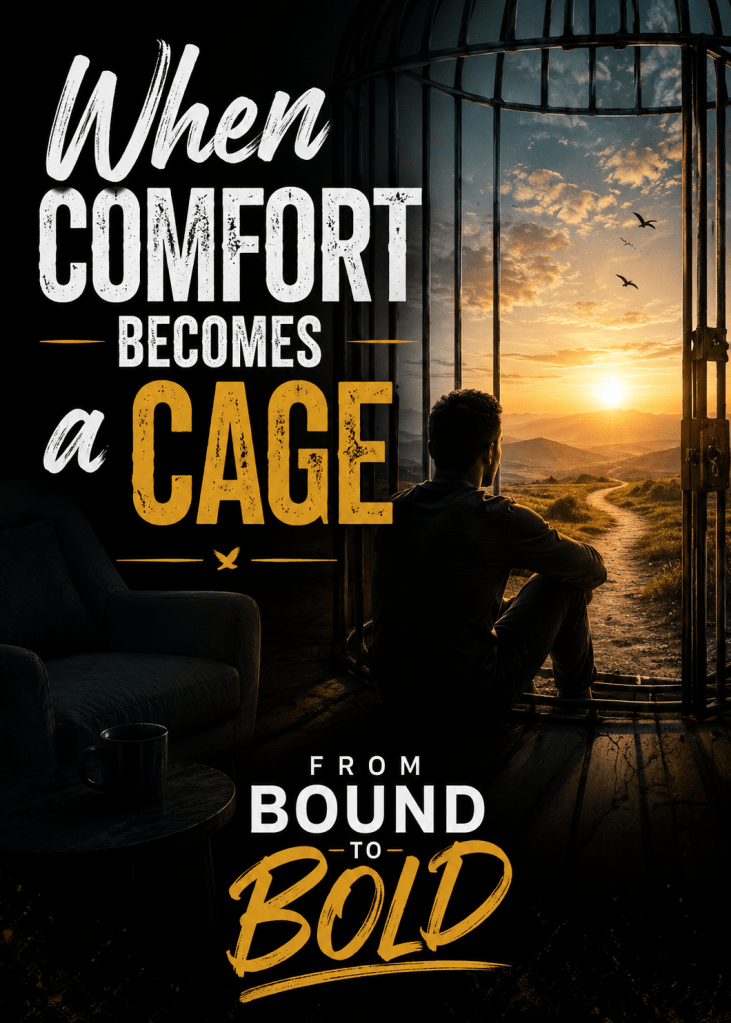
 Breaking Barriers - From Bound to Bold
Leave a comment